TPM vs PMT
Role of the TPM and PM their strengths and scope
PMT and TPM
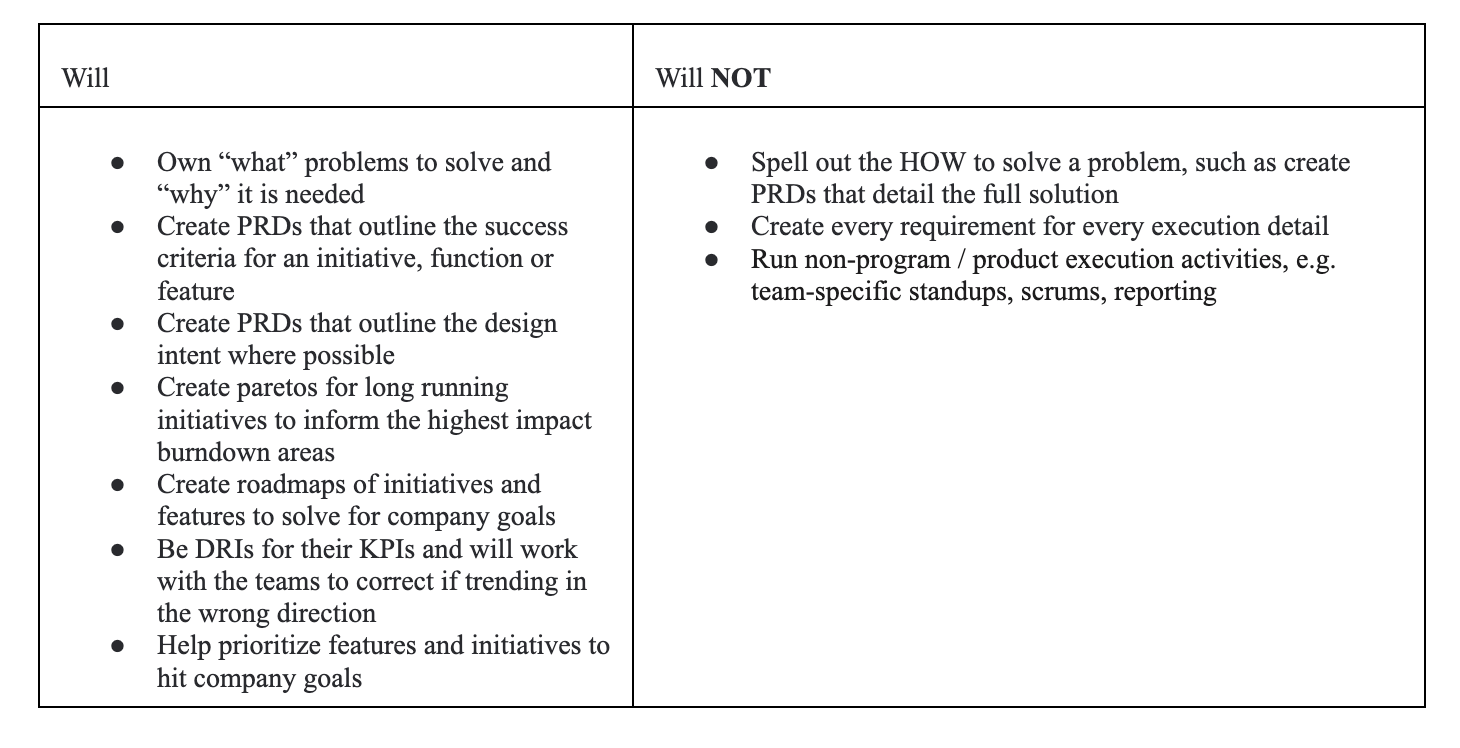
PMTs are the ones that define the KPIs, product strategic roadmaps, identifies the opportunity areas, and figures out which to pursue as the owner of the product area that will achieve that KPI. TPMs will partner and provide input to the KPIs and opportunity areas for the product, but ultimately the decision maker is the PMT. The work is then handed off to TPM to drive the work with continuous looping with PMT to ensure we are moving in the correct direction or need to re-pivot. TPMs will also consolidate efforts if there are multiple PMTs involved in a higher level goal and will drive consensus and the plan to get the outcomes.
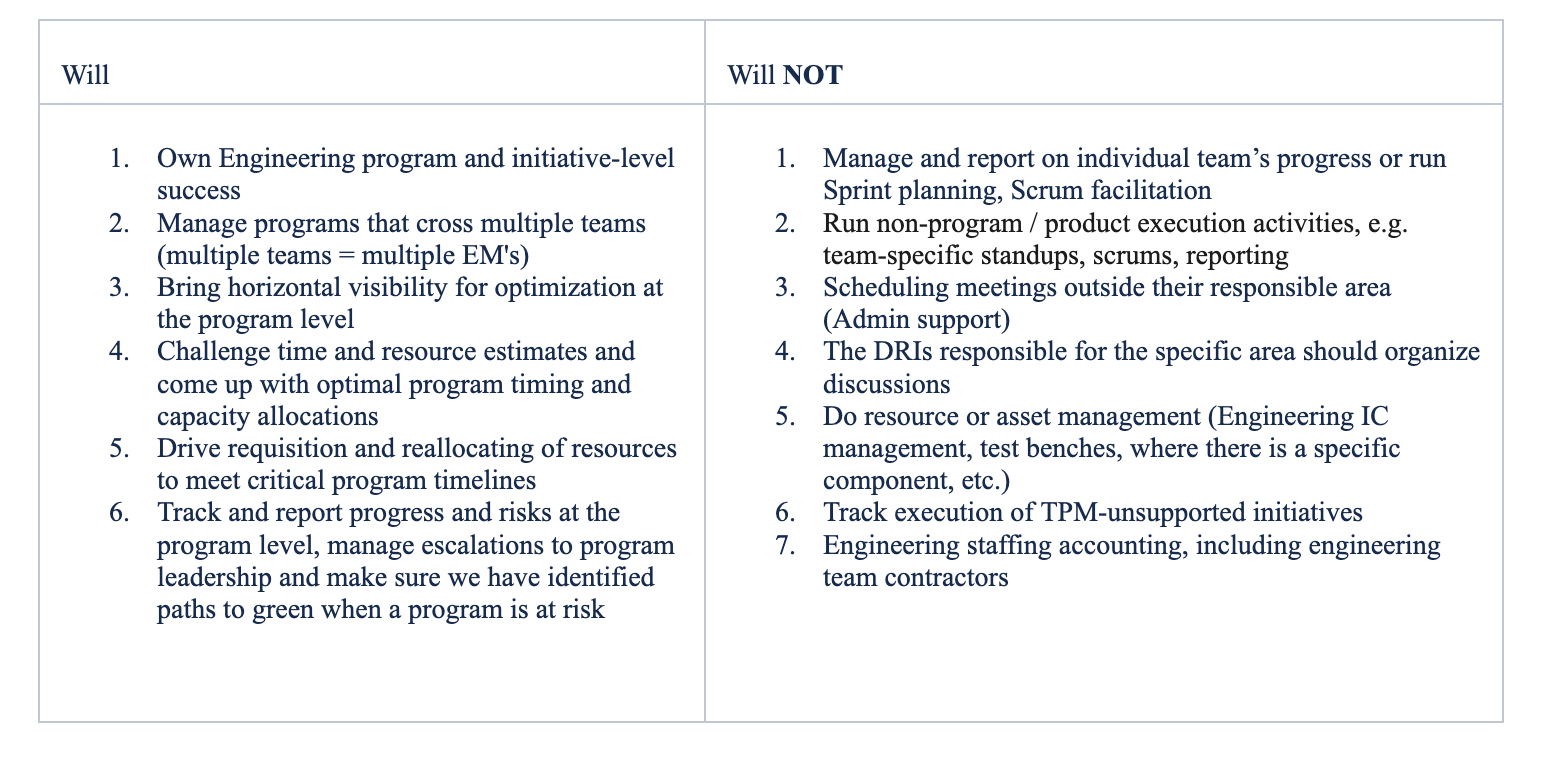
PMT owns the “what” and “why” while TPM owns the “when” and “how” of a program, product, initiative
PMT is more focused on long-term, nebulous product strategy definition and the TPM is more focused on strategic execution and team efficiency to deliver long term deliverables
Even though it’s not black and white, these are some good guiding principles and each role can negotiate how they work together to ensure successful delivery of goals for the team.
PMT and TPM roles are expected to complement each other, working closely together and aligning on program scope and goals to build great teams that create and deliver impactful products and programs; they will strategize how to leverage each others' greatest strengths with an aim to multiply the impact for the team and themselves.
TPMs
TPMs will be responsible for the “when” and the “how” of the program, and are held accountable for our teams delivering projects within the agreed upon timeline and requirements.
PMT
PMT will be responsible for the “what” and the “why” of the requirements, and are held accountable for our teams building the right products for external customers or the right products for our internal engineering customers or our external customers and achieving the necessary results.